











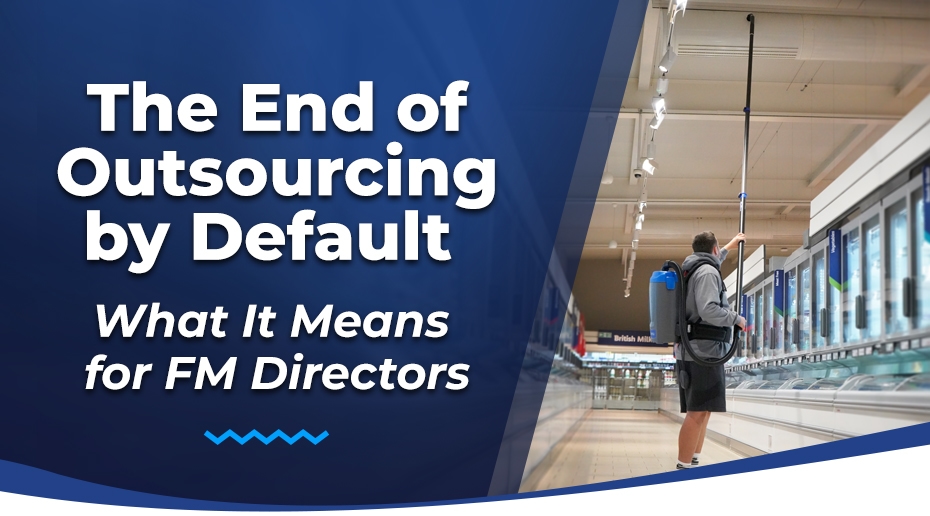
Two headlines from the past five weeks matter to anyone running commercial FM strategy. In mid-June, the government announced a new approach to procurement built around ending “outsourcing by default” and bringing services like cleaning and security back in-house. In late July, Mitie agreed to a £3.1bn takeover by OCS, the latest sign of consolidation among the UK’s largest FM providers.
The Mitie-OCS deal is a big story on its own. But for anyone thinking seriously about in-house facilities management in the UK, the policy shift is the one with longer legs. It signals a change in thinking that will shape FM strategy for years, whether or not your organisation is directly affected by the new rules.
From Outsourcing by Default to Insourcing by Design
The government’s position is unusually direct. Chief Secretary to the Prime Minister Darren Jones has said he wants to end the era of “outsourcing by default” and build stronger in-house capacity, arguing that the cheapest short-term option doesn’t always deliver value over the long run.
That isn’t just a soundbite. It comes with mechanisms attached:
- A mandatory Public Interest Test for central government service contracts over £1m, requiring departments to assess whether a service could be delivered more effectively in-house before it goes out to tender.
- From 1 April 2027, this test applies to new projects and re-procurements. In practice, internal delivery becomes the default position to disprove, rather than the exception departments have to justify.
- Departments with more than £100m in annual contract spend must produce five-year insourcing strategies to rebuild in-house capability.
- As a first concrete step, the Cabinet Office plans to bring cleaning and security services back in-house across 83 government buildings, including Downing Street, as existing contracts expire from 2028.
The rationale is that decades of outsourcing hollowed out the state’s own capacity to deliver services, and the new approach is designed to rebuild that capacity rather than simply chase the lowest price. It’s a significant change in direction for UK public sector insourcing strategy, and one that’s likely to influence thinking well beyond Whitehall.
Why This Matters Beyond the Public Sector
You might not be directly caught by the Public Interest Test. The wider signal still matters, for three reasons.
It validates a broader rethink of the outsourcing model.
For thirty years, FM strategy has largely assumed that external providers are more efficient, that competitive tendering delivers better value by default, and that organisations don’t need to hold their own delivery capacity. If government is now questioning those assumptions for cleaning and security, it’s a fair question for any commercial FM director to ask whether the same assumptions still hold for their own estate.
It increases the likelihood of hybrid and in-house delivery models spreading.
Even without a full move to insourcing, this policy environment makes a few things more likely: public sector clients shifting some services in-house and changing the shape of available contracts, more organisations experimenting with hybrid delivery where core services sit in-house and specialist or peak work stays outsourced, and closer scrutiny of market concentration after deals like Mitie-OCS. If your current model assumes a stable, long-term relationship with one or two large providers, it’s worth thinking about how much optionality you want to build in.
It raises the importance of internal capability.
Whichever direction your organisation goes, the work still has to happen safely, compliantly and efficiently. That means the right equipment for the job, trained and competent staff, proper maintenance and servicing to keep assets available and compliant, and clear processes for monitoring performance. This is exactly the gap a service-led equipment partner can help close.
This isn’t just a public sector view either. A recent MTW Research analysis of the UK contract cleaning market, based on £6bn of sales data, names insourcing as one of the live threats facing contract cleaning providers this year, alongside a wave of mergers and acquisitions of the kind seen in the Mitie-OCS deal. MTW still expects the market to grow, by around £200m in 2026 and £1bn by 2030, but increasingly on the back of AI, robotics and automation investment rather than expanding headcount, as contractors shift towards supervision, client communication and higher-value work rather than routine cleaning labour. It’s a sign that the direction of travel skyVac is responding to here isn’t confined to government policy. The industry’s own analysts are tracking it too.
Where skyVac Fits: Supporting the Move to In-House Capability
skyVac has spent years building a reputation around one problem: making cleaning at height safe. That’s not a pitch dreamed up for this policy shift, it’s the foundation the business was built on, and it puts us in a strong position to support organisations thinking about internal FM capability building.
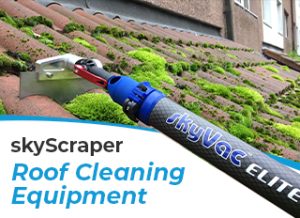
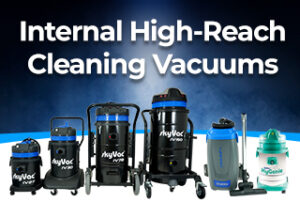
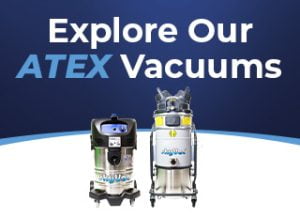
Much of the outsourcing conversation in FM circles has historically centred on exterior cleaning: gutters, roofs, patios and hard surfaces, work that’s specialist, often carried out at height, and harder to bring in-house safely without the right equipment. That’s exactly where skyVac’s range stands apart. Alongside our internal cleaning range and our ATEX range for hazardous environments, we supply dedicated gutter cleaning, roof cleaning, patio cleaning and pressure washing equipment, giving organisations a genuine route to bring exterior cleaning in-house rather than treating it as the one category that has to stay outsourced.
If your organisation is weighing up more in-house delivery, the practical questions are the same ones we help customers work through every day: which equipment suits the task, how operators get trained and kept competent, how machines get serviced and kept compliant, and what the replacement and upgrade cycle should look like. skyVac supports all of this directly, through tailored training programmes, servicing and maintenance when your fleet needs it, and ongoing access to parts and technical support that keeps downtime to a minimum.
Machine hire is a low-risk way to trial equipment on a real site before making a bigger investment, useful whether you’re testing a full in-house model or just want to see how a specific job would work without external contractors on site.
None of this requires a full switch to insourcing to be useful. If you’re reducing dependency on a single large FM provider, retaining some in-house capacity for resilience, or improving oversight of contracts you keep outsourced, skyVac can act as a neutral, expert partner: supplying equipment and training directly to your teams, and supporting pilot in-house projects on specific sites or services.
As the policy landscape shifts towards insourcing by design, the value of a consistent partner who understands the operational realities of cleaning at height only goes up. Our approach turns a one-off equipment purchase into an ongoing relationship: training, servicing, maintenance and parts, built to keep your fleet operational, compliant and productive over years, not months. You can see our range of gutter cleaning equipment built for exactly this kind of long-term use.
Questions to Ask Your FM and Estates Team
This is a good moment to stress-test your current delivery model. A few starting questions:
- Which services would be most exposed if the “outsourcing by default” mindset kept eroding?
- If we had to bring cleaning in-house on a few sites, what would we be missing in terms of skills, equipment and processes?
- How dependent are we on a small number of large FM providers, and what happens if one of them changes terms or merges again?
- Where could a training and servicing partner help us build internal capability without taking on all the risk ourselves?
You don’t need every answer today. Organisations that start asking these questions early will be better placed to adapt as the market and the policy landscape keep moving.
The Bottom Line
The Mitie-OCS deal and the government’s new stance on outsourcing aren’t isolated stories. Together they point to consolidation among large FM providers, a political drive to rebuild in-house capacity in the public sector, and a growing need for every organisation to reassess not just who delivers essential services, but how.
In that environment, a partner who can help you build, maintain and optimise internal capability becomes more valuable, not less. That’s the role skyVac wants to play: not just supplying equipment, but helping you deliver cleaning at height safely, efficiently and compliantly, for as long as you need us to.
If you’d like to talk through your current service model and where a training and servicing partnership could add value, get in touch with the skyVac team.